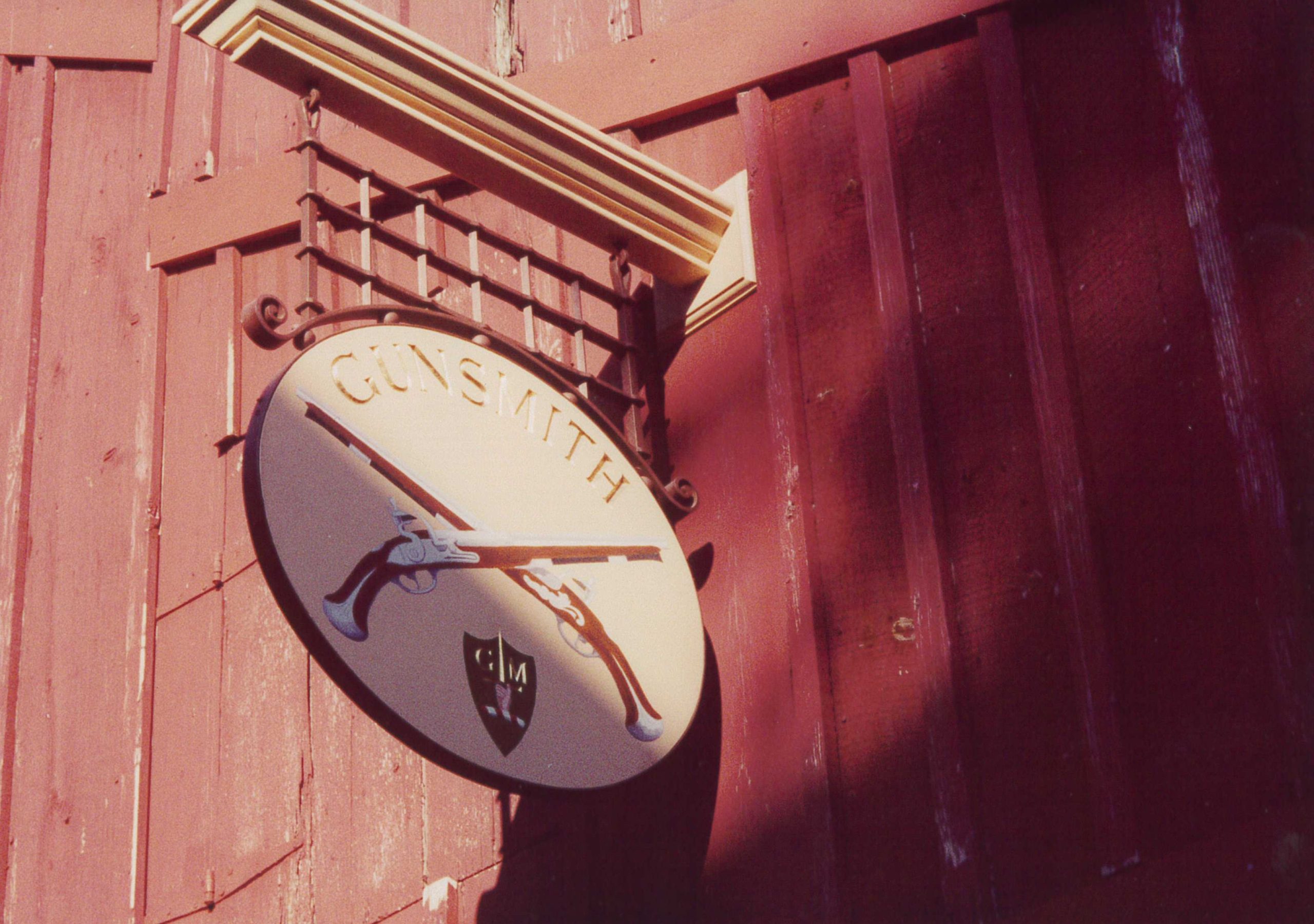
For generations, the Gunsmith Shop has been one of the most popular living history demonstrations at the Waterford Fair. More than a place to see traditional craftsmanship, it offers visitors a window into the essential role firearms and gunsmiths played in early American life.
In the 18th and early 19th centuries, firearms were indispensable to settlers moving into the Virginia frontier. They provided food through hunting while farms and fields were being established, protected families and livestock from wild animals, and were relied upon for personal safety in an uncertain landscape. Virginia law also required most white men of militia age to maintain a working firearm, making skilled gunsmiths an important part of every community.
The history of Waterford itself reflects this changing frontier. Founded in 1733, the village was established during a period of westward settlement following treaties that shifted the boundaries between colonial settlements and Native lands. Like many communities of the era, Waterford grew within a complex and evolving historical landscape that shaped the daily lives of its residents.
Beyond their practical uses, firearms were also central to recreation. Competitive shooting matches were a favorite pastime throughout the colonies, attracting skilled marksmen and enthusiastic spectators alike.
A Fair Tradition Begins
The Gunsmith Shop’s story at the Waterford Fair began in 1950, when master craftsman William “Bill” Hunley was invited by early Fair leader George Bentley to demonstrate the hand construction of muzzleloading firearms.
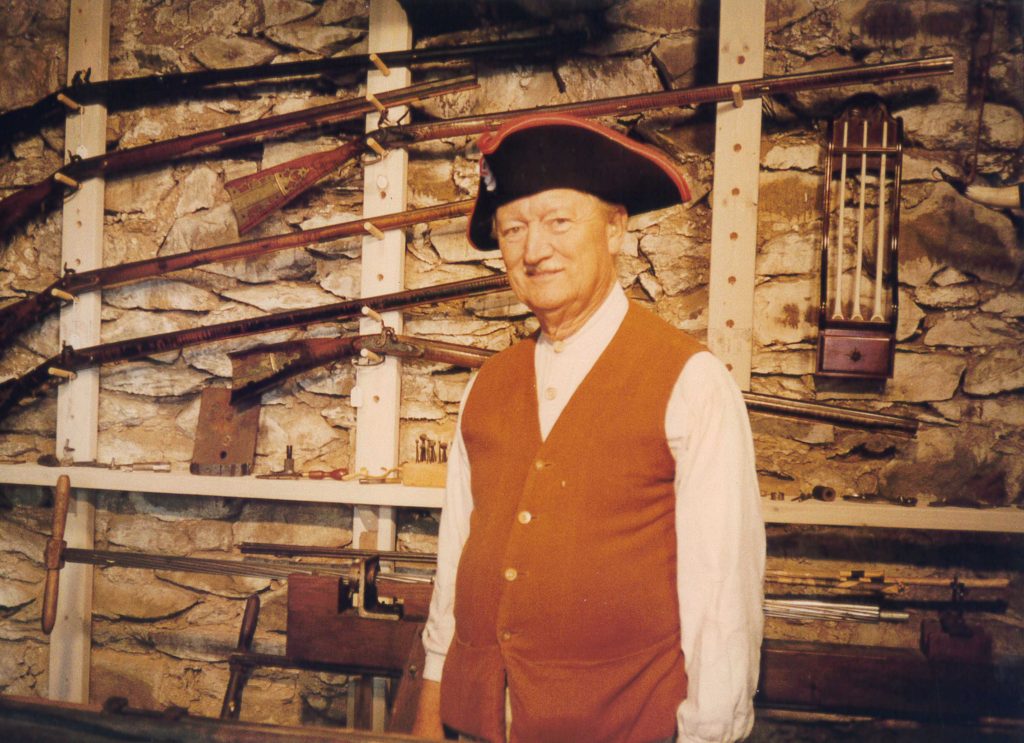
Bill had already earned a reputation alongside his father for building exceptional reproduction percussion pistols. Their work was so accurate and well-crafted that they dominated Virginia state muzzleloading competitions in 1948 and 1949. Their success became legendary when they were barred from competing in 1950 because their handmade firearms consistently outperformed the competition.
During that first Fair, Bill demonstrated his craft outdoors near the present Gunsmith Shop, and visitors even had the opportunity to try target shooting nearby. When rain interrupted the 1951 Fair, George Bentley moved the demonstration into the small one-room building that continues to house the Gunsmith Shop today.
Although few records survive from the shop’s earliest years, it became clear that the demonstration was very much a family effort. Bill’s wife, Carol, along with his father and brother Walter Scott, helped keep the shop running throughout the Fair weekend.
A Lifetime of Craftsmanship
Bill’s connection to Waterford extended beyond the Fair. By the mid-1960s, he had purchased property in the village and painstakingly relocated two 19th-century log houses to create his home. There he formed lasting friendships with fellow craftsmen and historians, including Edward Cunningham, whose enthusiasm for muzzleloading rifles and early American history complemented Bill’s own interests.
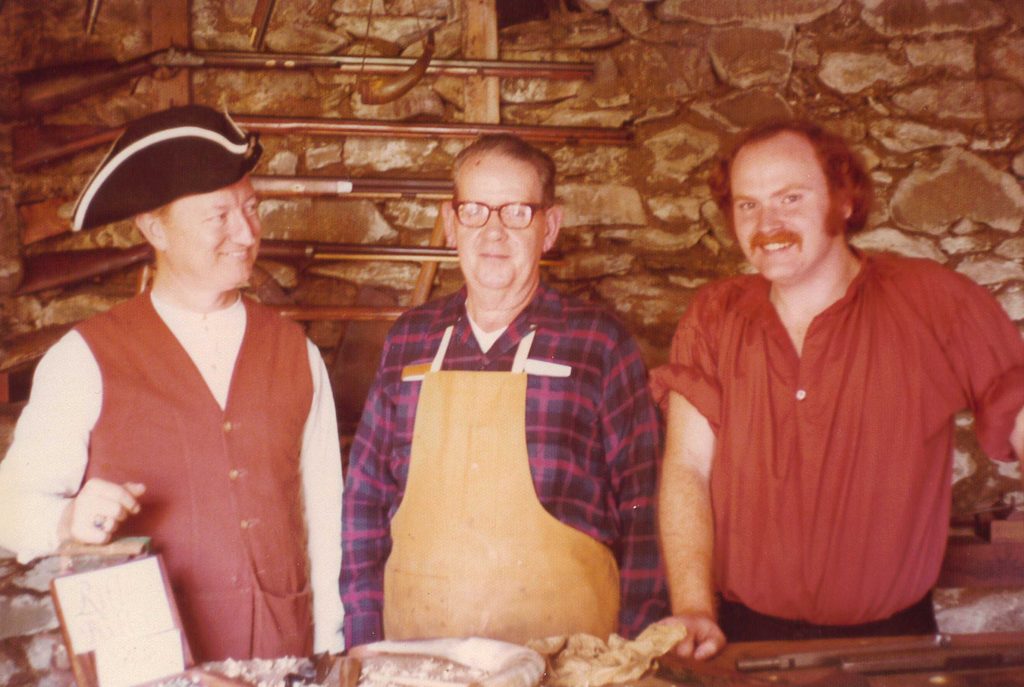
In the summer of 1969, another future steward of the shop, Glenn McIntyre, was introduced to Bill during a demonstration in Georgetown. Encouraged to visit the Waterford Fair, he spent the entire day observing the demonstrations before nervously sharing the first rifle he had ever built. Bill recognized both the craftsmanship and the passion behind the project and invited him to return as a demonstrator the following year.
That invitation marked the beginning of more than five decades of service. Together, Bill, Ed, and their newest teammate, Glenn, combined their talents to create demonstrations that explored every aspect of traditional gunsmithing, from forging barrels and lock parts to casting brass hardware, engraving metal, and carving wood. The Fair became more than a demonstration; it became a gathering place for friends who shared meals, music, stories, and a deep appreciation for early American craftsmanship.
Sharing History with Every Visitor
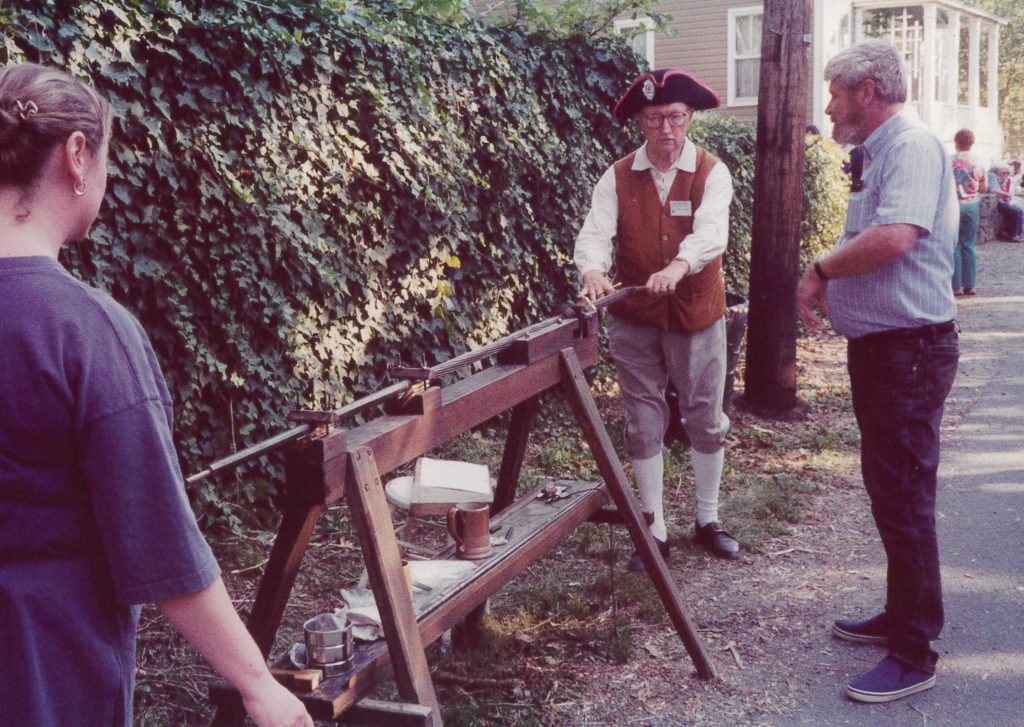
While the techniques demonstrated in the Gunsmith Shop remain fascinating, the conversations with visitors have always been equally rewarding. Curious children ask thoughtful questions, amateur historians share family stories, and unexpected connections to the past emerge every year.
One especially memorable encounter occurred when a visitor mentioned that one of her ancestors had manufactured pistols during the War of 1812. That ancestor turned out to be Simeon North, whose government contract marked the first successful production of firearms with interchangeable parts. To fulfill that contract, North developed one of the earliest metal-cutting milling machines, an innovation that helped lay the foundation for modern manufacturing and the Industrial Revolution. The visitor had known of her family connection but was delighted to discover the extraordinary significance of her ancestor’s achievements.
Moments like these are what make the Gunsmith Shop so special. Every Fair brings new visitors, new conversations, and new opportunities to connect the craftsmanship of the past with the people of today.
More than 75 years after the first demonstration, the Gunsmith Shop remains a living tradition at the Waterford Fair, preserving the skills, stories, and history of early American gunsmithing for future generations.